ABOUT THE PROJECT
Youths’ Participation in the Production of Indigenous Vegetables and Fruits (IVs&Fs)
Using Climate-Smart Approaches Leveraging Locally Available Resources
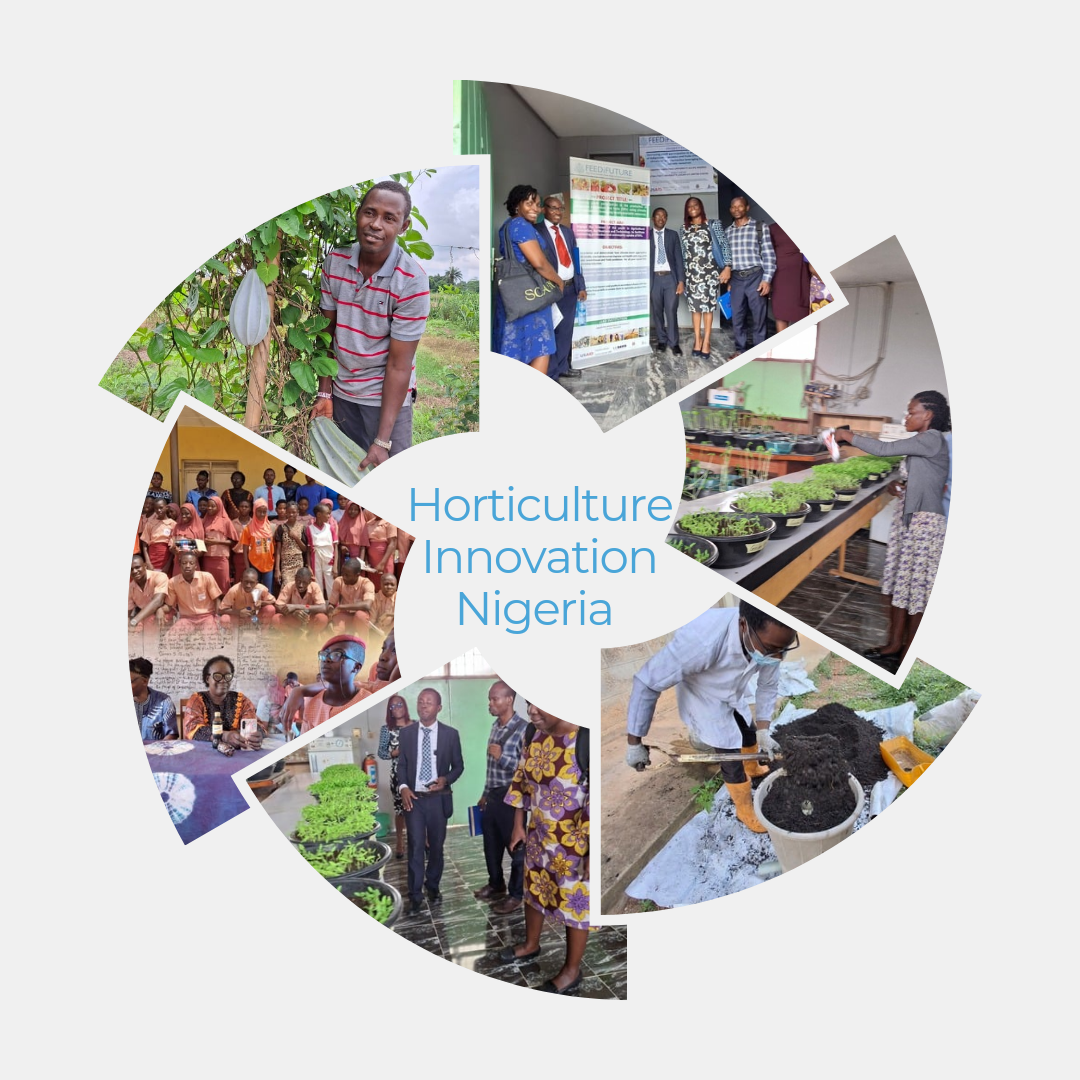
The goal of the project is to increase youth engagement in African indigenous vegetables and fruits production and consumption.
The unemployment rate among Nigerian youths has continued to increase in the last five years and currently stands at 53.4%. Climate change has continued exacerbating youth unemployment, especially in sub-Saharan Africa, where agriculture is the mainstay of the economy. The ripple effects of these are, but not limited to, increasing unemployment, malnutrition, micronutrient deficiency and youth restiveness. Poor soil health and fertility, lack of exposure to climate-smart agricultural practices, agribusiness models and marketing strategies, digital technology, and the use of prevalent local tedious production techniques have limited African youth’s participation in agriculture, especially in cultivating indigenous vegetables and fruits (IVs&Fs).
In recent years, there has been an increase in awareness of the potential of indigenous vegetables and fruits (IVs&Fs) to contribute to food and nutrition security (consumption of 400g/day of vegetables and fruits recommended by FAO and creating wealth ($1.04/day NBS), thereby improving the producers’ livelihoods in sub-Saharan Africa, especially in Nigeria. This is because these IVs&Fs are resilient, adaptive, tolerate adverse climatic conditions more than the exotic species, can be raised comparatively at lower management cost and on marginal soil, and are micronutrient. To increase these crops’ cultivation, outputs and consumption, low-cost management strategies that improve soil health (including carbon storage, nutrient cycling, and soil physical health), less tedious methods of production, and well-managed seed production procedures are required. However, coordinated research efforts to promote local populations’ adoption of climate-smart adaptation strategies, seed production and youth engagement in IVs&Fs production is seriously lacking.
This research seeks to address the following research goals for the first subtheme, namely:
- Expose youth to and expand interest in agricultural innovation and agribusiness, and
- Increase community uptake and exposure to indigenous vegetables and their associated innovation.
Aims and Objectives
Describe the primary and secondary aims/objectives of the research, or the project’s research questions or hypotheses.
The four objectives are to:
- Characterise and demonstrate how climate-smart approaches with locally-sourced resources improve soil health and crop yield under screenhouse production and field conditions in the main research station for all year-round IVs&Fs and seed production.
- Develop a website and mobile extension guides tailored towards youths on soil health management, cultivation, nutrition and food safety education of selected vegetables.
- Empower selected school leavers and youths in secondary schools (with gender consideration) on climate-smart approaches for generating all-year-round IVs&Fs as optimal nutrition-related outcomes through screenhouse and field demonstrations, on-site workshops, and digital technology.
- Assess the economic impact of the climate-smart approaches on yields and revenues as well as the nutritional impact of school garden nutrition-based education among youths and their families.
PARTNERS
Meet our partners
Prime Partner
Feed the Future Innovation Lab for Horticulture at University of California, Davis
Other Partners
- Obafemi Awolowo University, Ile-Ife, Nigeria
- Utah State University, Logan, USA
TIMELINE
Contract timeline.
Contract Start Year
March, 2023
Contract End Year
March, 2026